

Can Sindh turn its vast State land reserves from a source of legal controversy into a catalyst for economic growth?
With the right legal safeguards, transparent decision-making and institutional accountability, the answer could reshape the Province’s investment landscape.
State land is one of Sindh’s most valuable public assets. Properly utilised, it can attract industrial investment, create employment, expand infrastructure and generate substantial revenue for the Province. Yet, concerns over discretionary allotments, undervaluation, questionable revenue entries and long-term leases have historically complicated its use. The real challenge is not whether State land should be allotted, but how to ensure that every allotment serves a legitimate public purpose.
Sindh’s land-allotment framework includes laws, rules and policies governing the disposal and utilisation of State land. However, the exercise of these powers raised serious questions about transparency, accountability and the protection of public assets.
In 2012, the Supreme Court intervened to restrain mutation, allotment, transfer and conversion of State land amid concerns regarding the integrity of Sindh’s revenue records and the manner in which public land was being disposed of. The Court expressed concern over land being transferred at “throwaway” prices without adequate public participation. The underlying problem was clear: unchecked discretion, unreliable records and inadequate scrutiny could deprive the Province of the true value of its land.
The answer lies in reforming not merely the process of allotment, but the structure through which decisions are made.
A framework that clearly defines the Chief Minister’s standalone powers while introducing committee-based decision-making can help address the risks associated with concentrated executive discretion. Where a decision rests solely with one authority, inadequate checks may leave room for inconsistent treatment, preferential allotments or insufficient consideration of market value and public interest.
Committee-based scrutiny offers a potential corrective. Collective examination of proposals, independent valuation, documented deliberations and prescribed eligibility criteria can introduce additional layers of accountability. Clearly defining the respective roles of the Chief Minister and the relevant committees can also reduce ambiguity, discourage arbitrary decisions and make the process easier to audit.
Sindh does not have to choose between accountability and development.
The objective is not to weaken executive authority, but to ensure that it operates within transparent legal boundaries. Written reasons, conflict-of-interest safeguards, disclosure requirements and independent review can make decisions more defensible and restore public confidence. Crucially, any new framework must comply with applicable law and subsisting judicial orders.
Reform must ultimately deliver results. Digitised land records, cadastral mapping, transparent publication of available parcels, competitive auctions and enforceable lease conditions can protect public ownership while enabling legitimate commercial use. Development milestones and effective resumption provisions can further prevent speculative acquisitions and prolonged underutilisation.
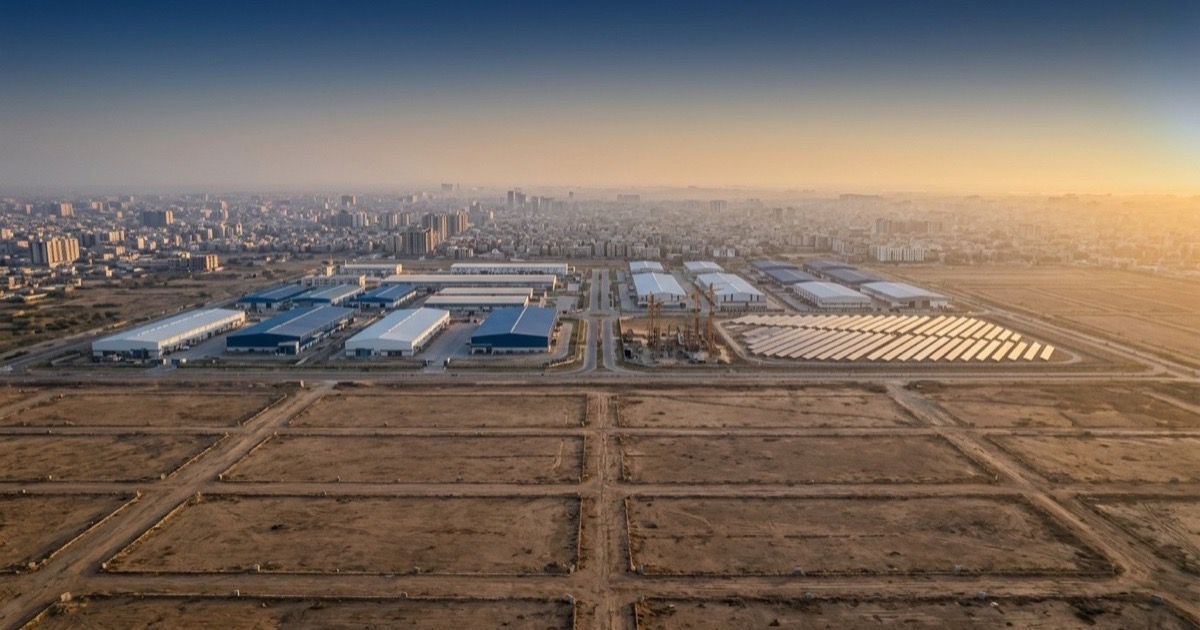
With a lawful mechanism in place, State land can become a platform for manufacturing, logistics, warehousing, renewable energy and export-oriented businesses. Transparent access can give investors greater certainty, while competitive pricing can ensure that the Province receives fair value.
Sindh does not have to choose between accountability and development. By combining clearly defined executive powers with committee-based scrutiny, reliable land records and transparent allocation procedures, the Province can move beyond the controversies of the past. The opportunity is to transform State land from a recurring source of litigation into a foundation for investment, employment and sustainable economic growth.
This opinion piece is published for general information on developments in land, real estate and public law in Pakistan. It is not legal advice and should not be relied upon as such. It does not comment on any particular allotment, case or proceeding. For advice on a specific matter, please contact the firm.
All insights